Of wild plants in places of transit – urban and suburban botanical regeneration; Tenacity along transport lines.
Weeds are great travelers; they are, indeed, the tramps of the vegetable world. They are going east, west, north, south; they walk; they fly; they swim; they steal a ride; they travel by rail, by flood, by wind; they go under ground, and they go above, across lots, and by the highway.
– John Burroughs
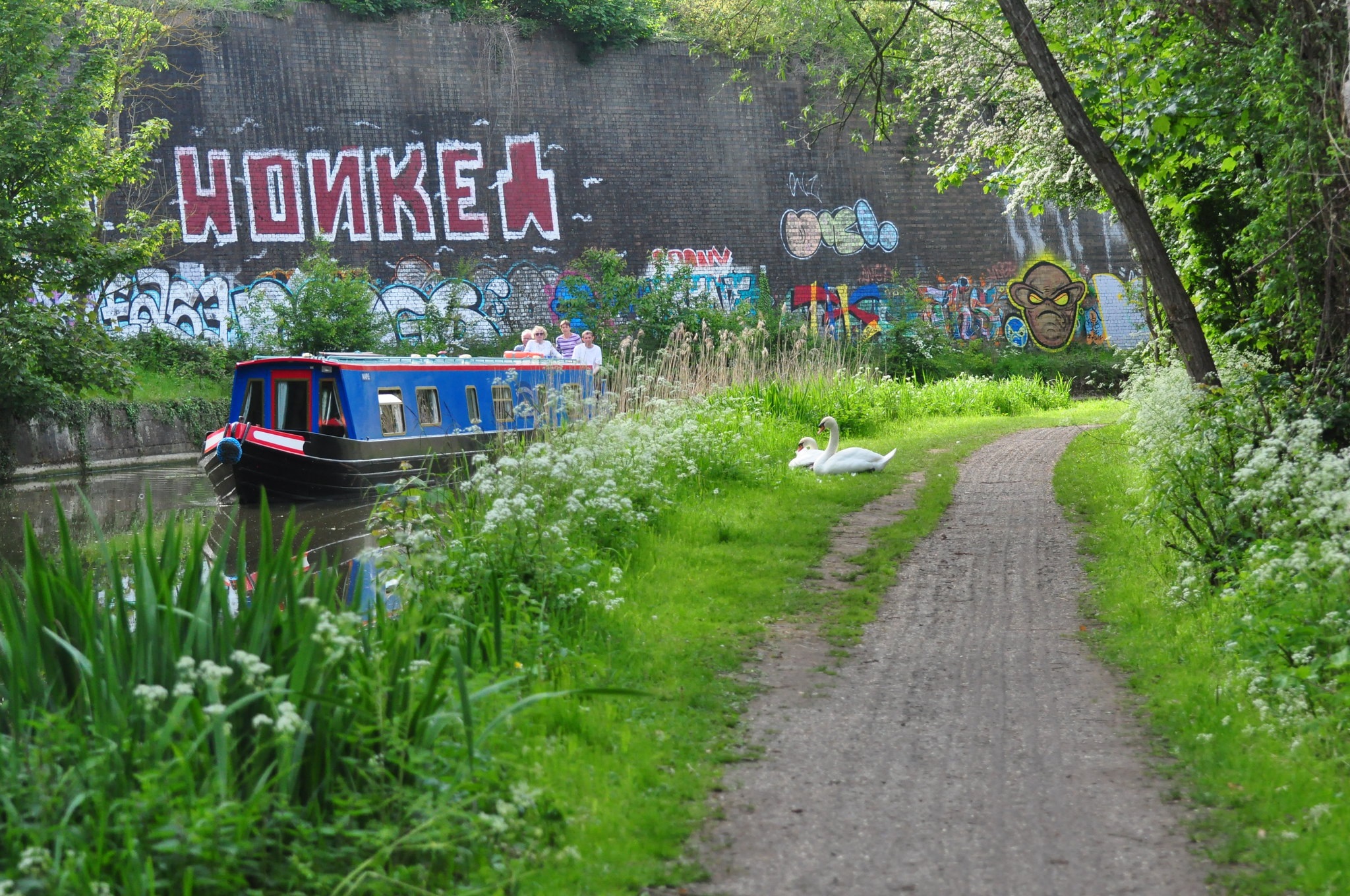
STEP outside the Pumphouse Garden and you step foot onto a botanical swathe cut through the landscape, a green corridor that grew up around the inland waterways network and to this day has a unique and crucial role in preserving natural highways through an increasingly habitat poor landscape.
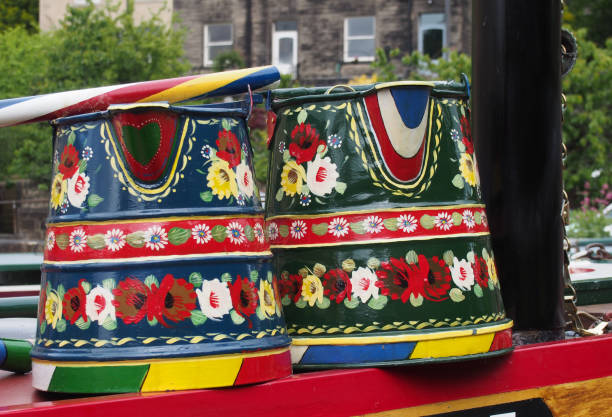
Historically plants have always bloomed on the canals be it on bank or boat. Bold roses blossom gaily from the brushes of folk artists onto Buckby cans and back cabins, fleets of historic FMC motor boats and buttys glide along the countryside cuts, their bows wreathed with names of nature and botany: Clover, Aster, Lupin, Laurel and Bramble. A tangle of delicate floral names also grace the heavy bows of the Braunston built ‘Barney Boats’: Knotweed, Marigold, Lily and that of the purple nodding waterside herb, Comfrey.
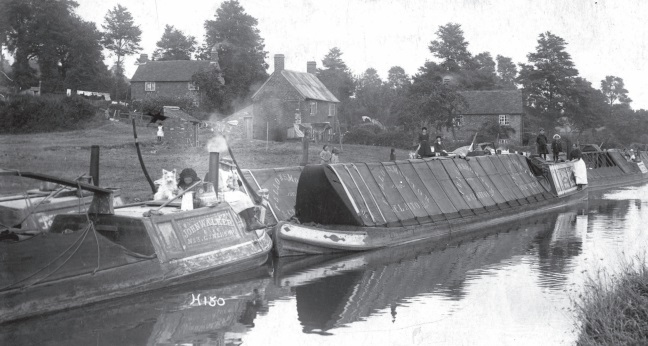
In a testament to the tenacity of weeds and wild plants, FMC steamer Speedwell and her crew played a central role in the Braunston Strike of 1923 organised by the recently formed Transport & General Workers Union; however beware the Speedwell, as it holds one of the more gruesome warnings of plant-lore: a legend that if you are to pick this delicate, blue, stellate little flower, then birds will come and peck out your eyes! A warning to the curious and cruel of hand.
The connection to nature has always run like a golden thread through the workings of the inland waterways (one of my favourite groups being the Fish Class boats described here by the owner of FMC Bream) and I am proud to say nature and conservation, habitat protection and creation is something we have at the forefront of our intentions in the PHG.
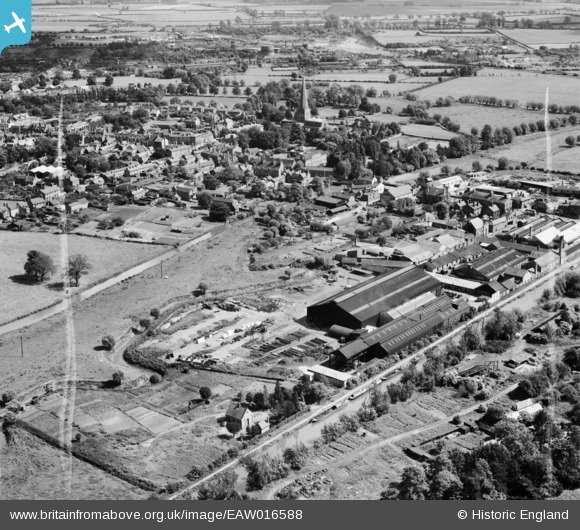
In the aerial photo below from 1948, nestled next to The Foundry Equipment Co. Ltd., you can see the pump house (with current PHG site to the right of it) on the bottom centre-left of the photo. Behind it there appears to be cultivated plots of land, so it seems our little accidental garden is continuing that waterside growing tradition.
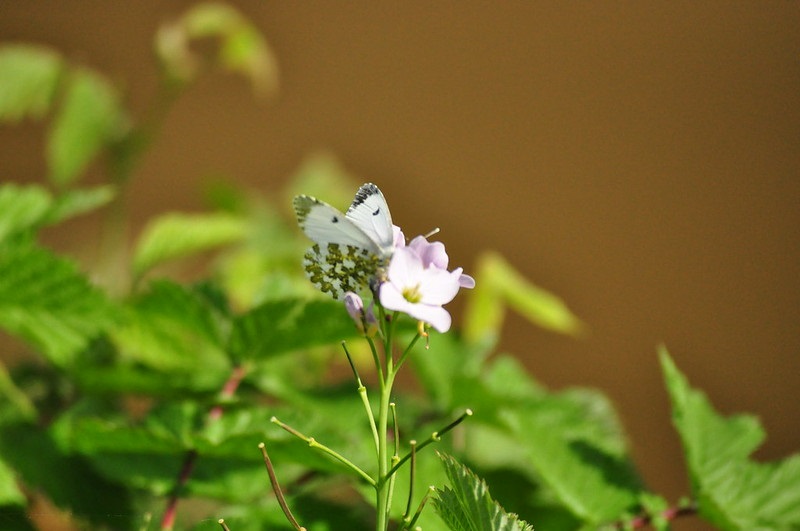
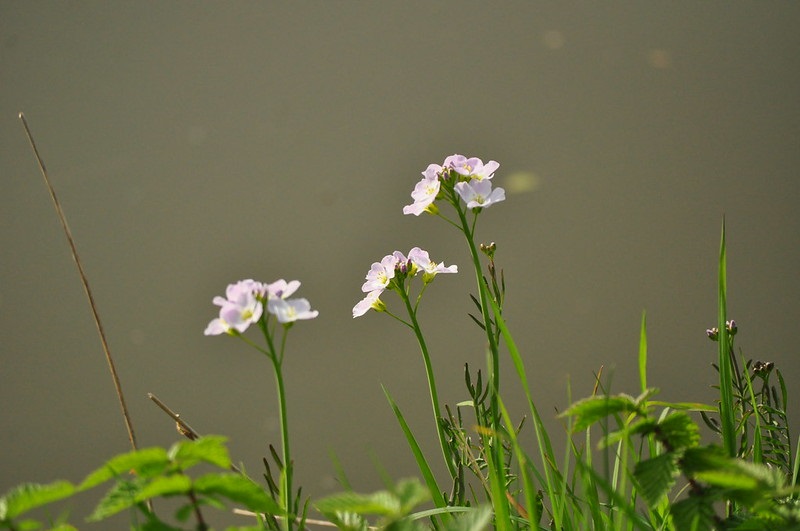
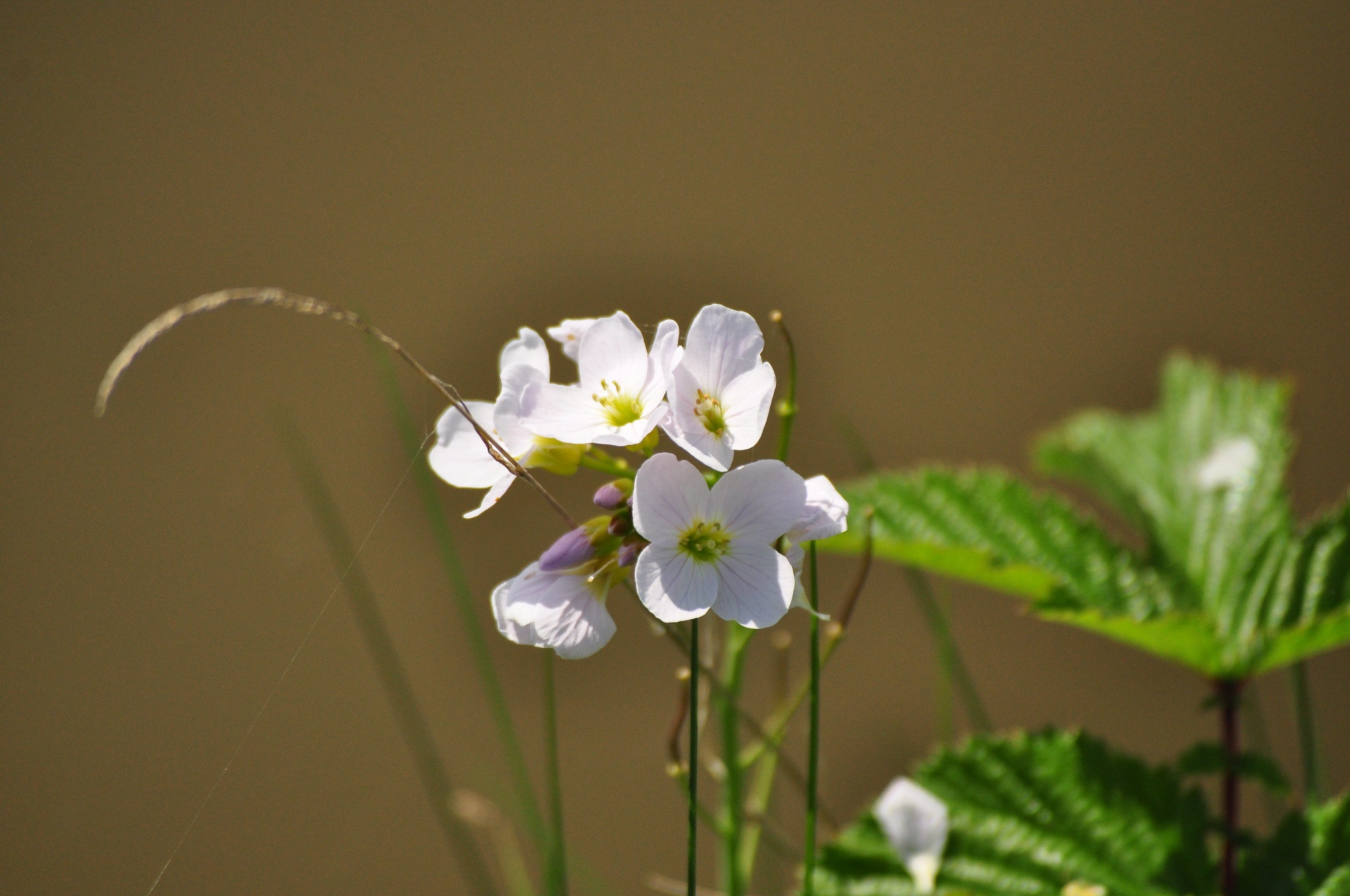
The towpath itself is a riot of useful plants: apothecary’s herb and dye root Meadowsweet (Filipendula ulmaria) froths alongside the bank, Green Alkanet (Pentaglottis sempervirens), the electric blue flowered food plant of the Scarlet Tiger Moth, spills it’s rangy limbs onto the towpath, Elder (Sambucus nigra), not only provides bounty from it’s flowers and piquant berries but is the host for Jelly Ear fungus (Auricularia auricula-judae). Jack-By-The-Hedge (Alliaria petiolata), like so many lime green clouds, crowd beneath the Hawthorn and Sloe with mustard-sharp, garlicky leaves and, wet-footed and dainty, the Lady’s Smock or Cuckoo Flower (Cardamine pratensis) raises her pink head among the grasses in May and June, her basal leaves concealing a wasabi like punch of flavour and her flowers nectar for one of our earliest emergent butterflies, the Orange Tip (as seen in my photographs below from the towpath outside the PHG).
Canals and railways often follow parallel courses so it stands to reason that railways also can provide a green corridor both in their working life and an afterlife, once the screech and thrum of the rails has been silenced.
At this time of year the early summer sidings are alive with shades of purple, white and yellow. Spires of Foxglove and furred Mullein nod in idle languor among sprays of Purple Toadflax, piercing through a frothing sea of Ox-Eye Daisies that bend and follow the whip of the trains as they pass; a salutation from the calm of the wild banks to the restless rails, a snap of electricity from overhead wires cracks through the bee-buzz of these floral margins and the mournful, keening cries of the ever-circling Red Kites.
Railways have a fascinating history of being places where greenery and flowers were encouraged, as described in an excellent article by Garden History Girl on the botanical history of more formal methods of beautifying the railways. In Canada too the CPR railway gardens of Canada provided verdancy and colour to otherwise dusty and unwelcoming transportation hubs, always strangely fractious, liminal spaces.
But what happens when these rails drop out of service? In some cases they fall softly to re-wilding by plants and nature in a slow take back from seeds dropped by birds or blown in on stulted late summer air, or perhaps on the wind of the last locomotives passing through before quiet smothered the tracks. These iron-struck desire lines, now ragged edged with plants and verdure, host the ghostlike pad of foxes, from field to woodland to urban tunnel, a thoroughfare of gravel crunch and the whisper of ever encroaching leaves. Bats roost on the diesel-black brick arches of tunnel roofs, emerging en masse at dusk like the spectre of the steam plumes from rattling locomotives who have long reached their terminus.
One place where you can see the positive evolution of former transport lines is the Petite Ceinture or ‘little belt’ former railway in Paris. Circling the city it is a marvel of repurposing and greening, something which could very well have gone under another jagged office development or been closed off behind spike crowned fences.
There are a few community and wild gardens scattered along the line, the serpentine rails still extant. Keen eyed, skittering lizards bask on these rusting slicks of radiating heat among the wild plants who have colonised the spaces between sleepers and parallel pathways to grow and blossom.
Below are some photographs of some of the nature gardens and community growing spaces seen on one of my walks along it’s accessible segments.
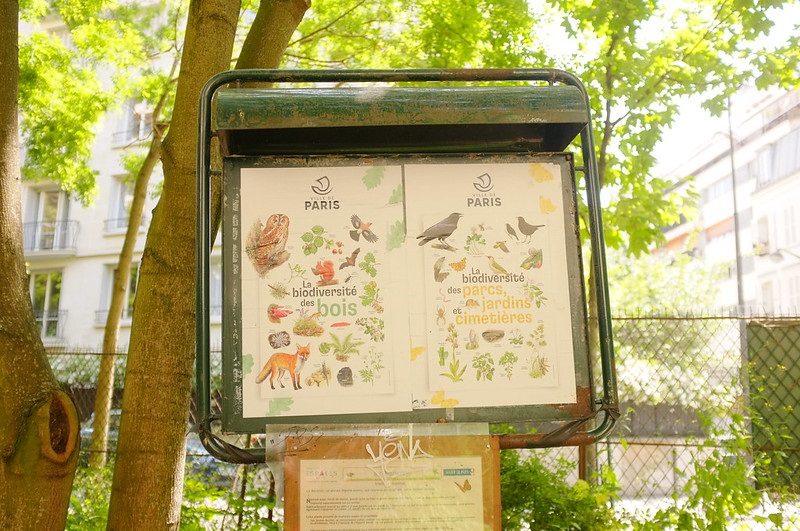
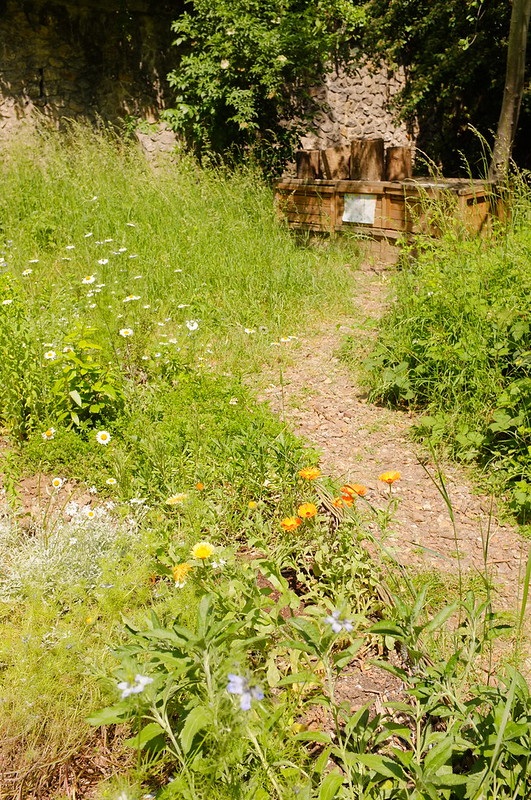
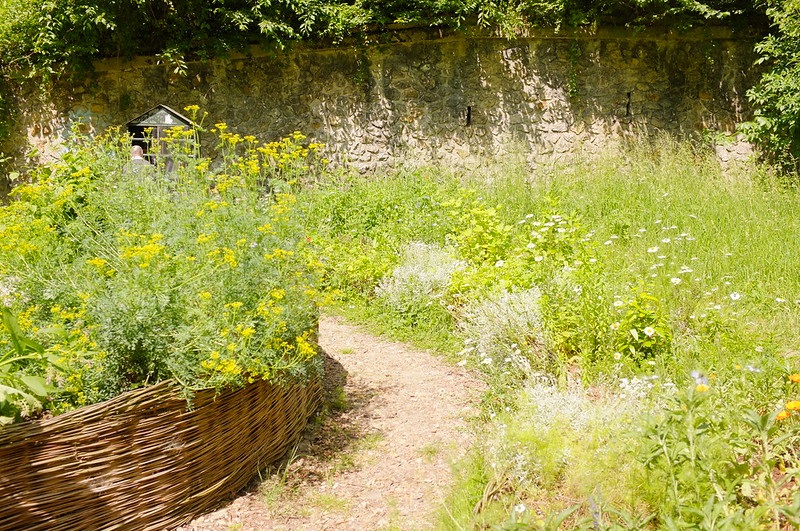
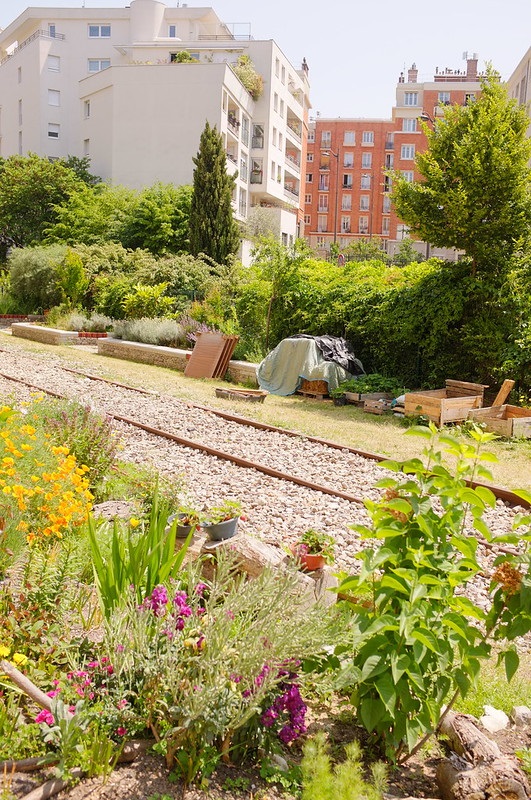
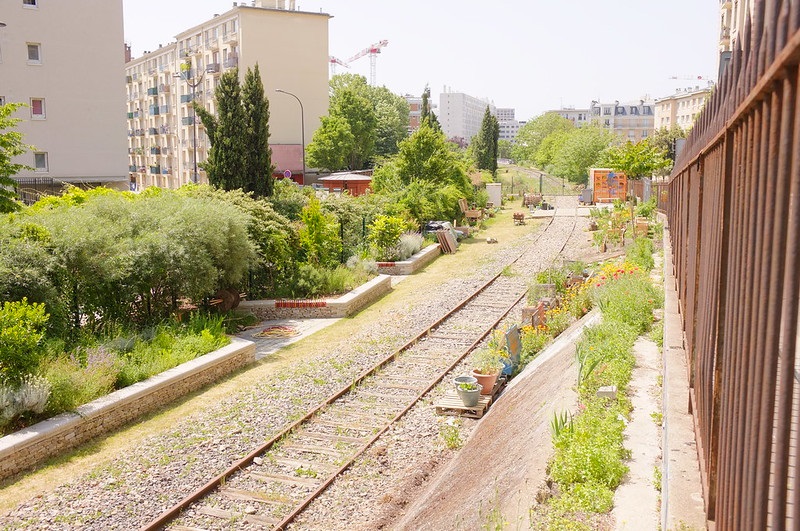
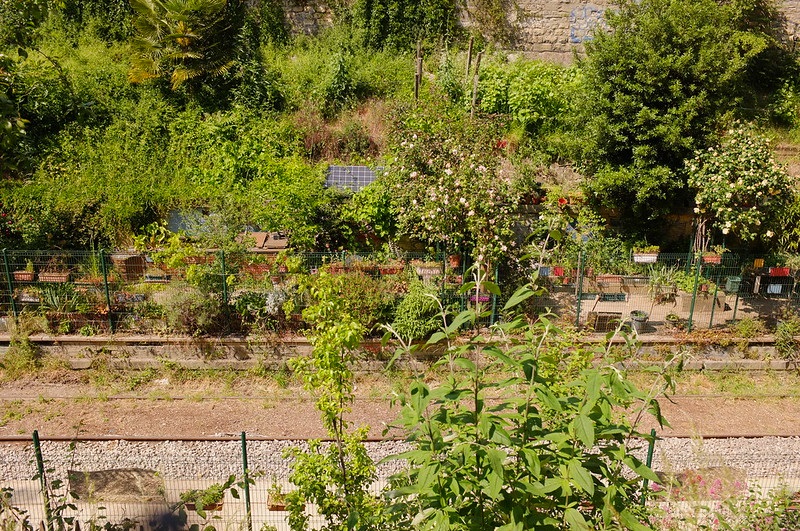
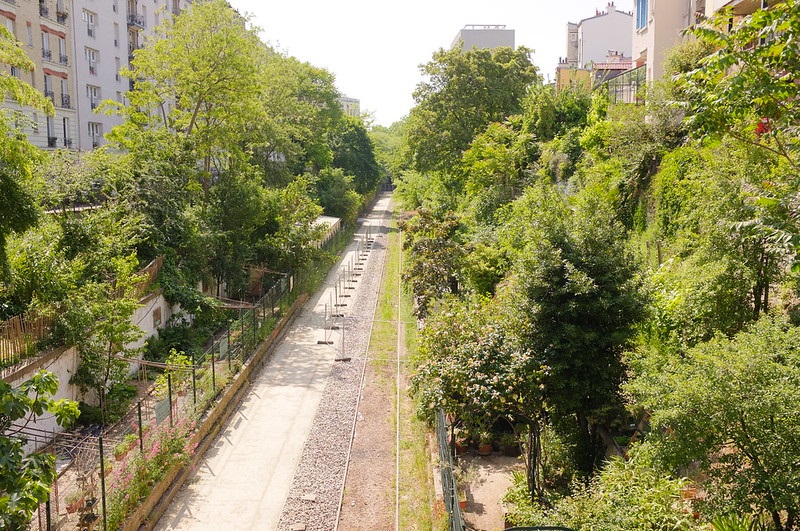
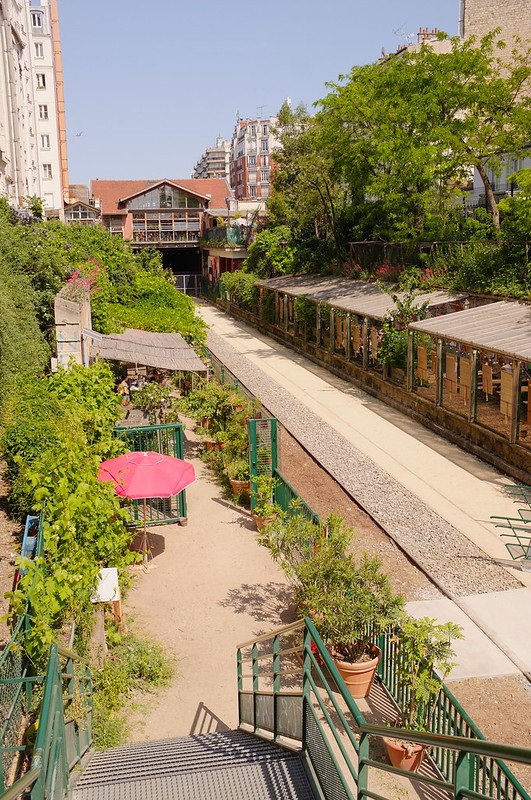
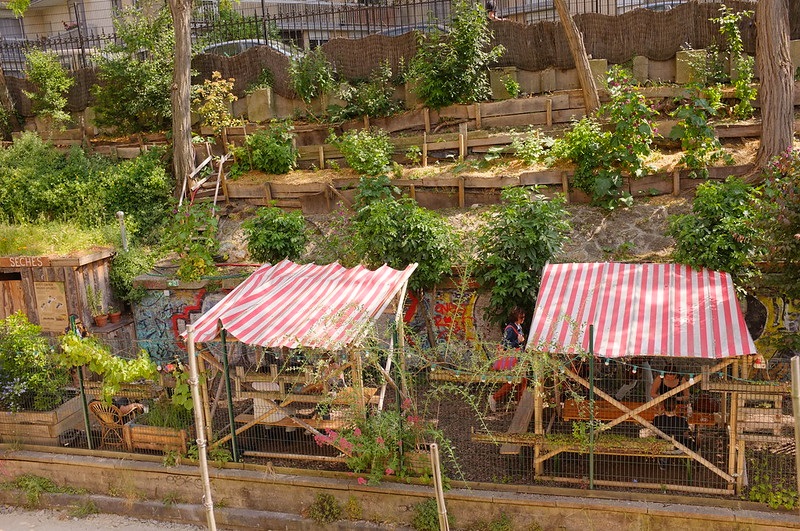
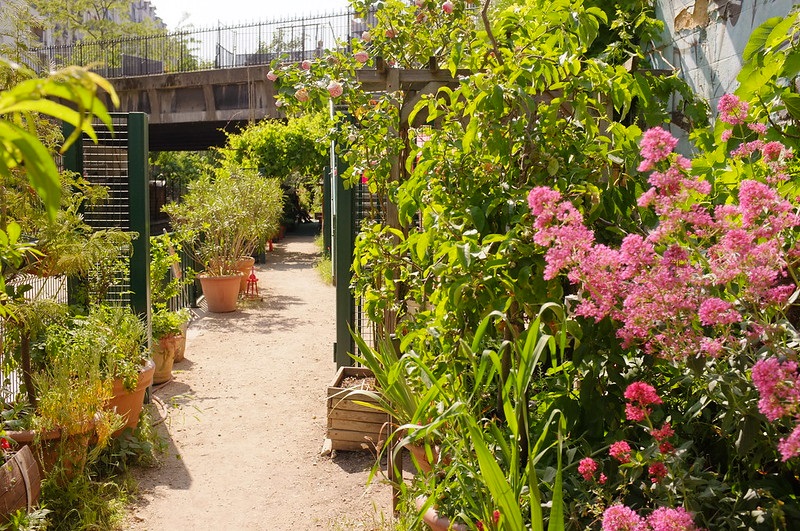
It can be said that the jewel in the flower crown of the Petite Ceinture is La REcyclerie – an urban farm, community vegetable growing space, sustainable café and cultural hub inhabiting the former Ornano station in the 18th Arrondissement. A little promeande round the pedestrian and cycle way of the Petite Ceinture takes you to the 19th Arrondissement where the first urban farm in Paris, the ambitious and angular Ferme du Rail, sits. An urban agricultural project slicker and less rustic than La REcyclerie but fraternal in characteristics with the on site seasonal, grown produce showcased in the restaurant, community growing space and strong social enterprise element.
These two spaces really showcase the pinnacle of how transport lines can become thriving green spaces but exit the Eurostar in London and we have spaces where railway edgelands have been brought back into the mud-grubbed hands of the community too such as Dalston Curve Garden, Crofton Park Railway Garden and Streatham Railside Garden which have reclaimed land formerly fallow along London transport lines.
Weary at the end of a journey and longing for home there’s one more space that leads all the way back round to the PHG and the end of this exploration of transport green spaces both wild and cultivated.
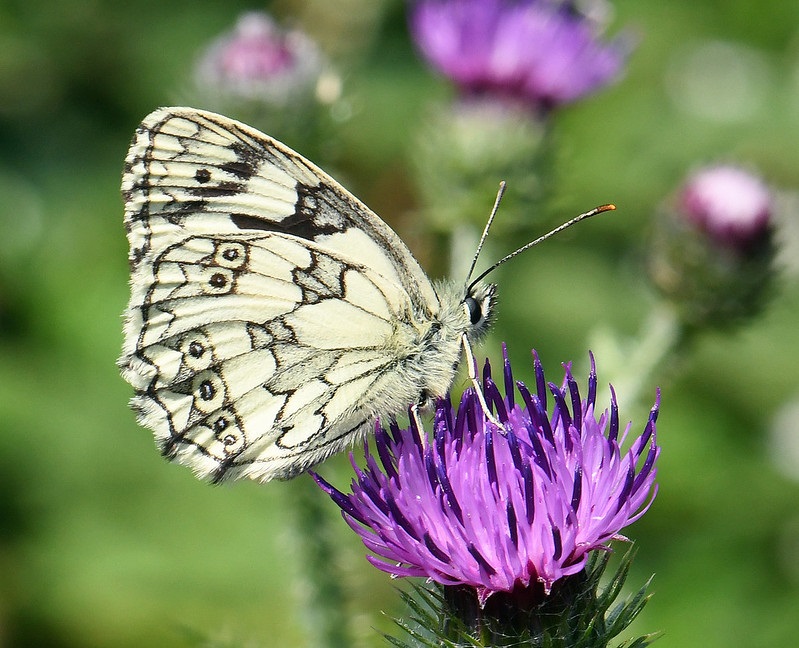
Formerly, Leighton Buzzard, Dunstable and Luton were connected with a railway line. This was closed during the Beeching cuts of 1965 and the old lines returned to nature until they too were brought back into places of transit. Just outside Leighton Buzzard is the Sewell Greenway a cycle and footpath that links Stanbridge to Dunstable. It cuts through chalk downland and as such is host to species peculiar to this habitat such as Greater Knapweed (Centaurea scabiosa), Kidney Vetch (Anthyllis vulneraria), Pyramidal Orchid (Anacamptis pyramidalis) and Common Spotted Orchid (Dactylorhiza fuchsii) and the beautiful Bee Orchid (Ophrys apifera). Alongside these you can see the checkerboard winged Marbled Whites feeding on the nectar rich flowers.
Further along the former railway line is the Luton and Dunstable Busway and cycleway, it meanders along the foot of Blows Downs SSSI, where the air is punctated with the bubbling song of the skylarks, ancestors of the Dunstable Lark who flocked to the downs in years gone by and were netted then served up as a delicacy.
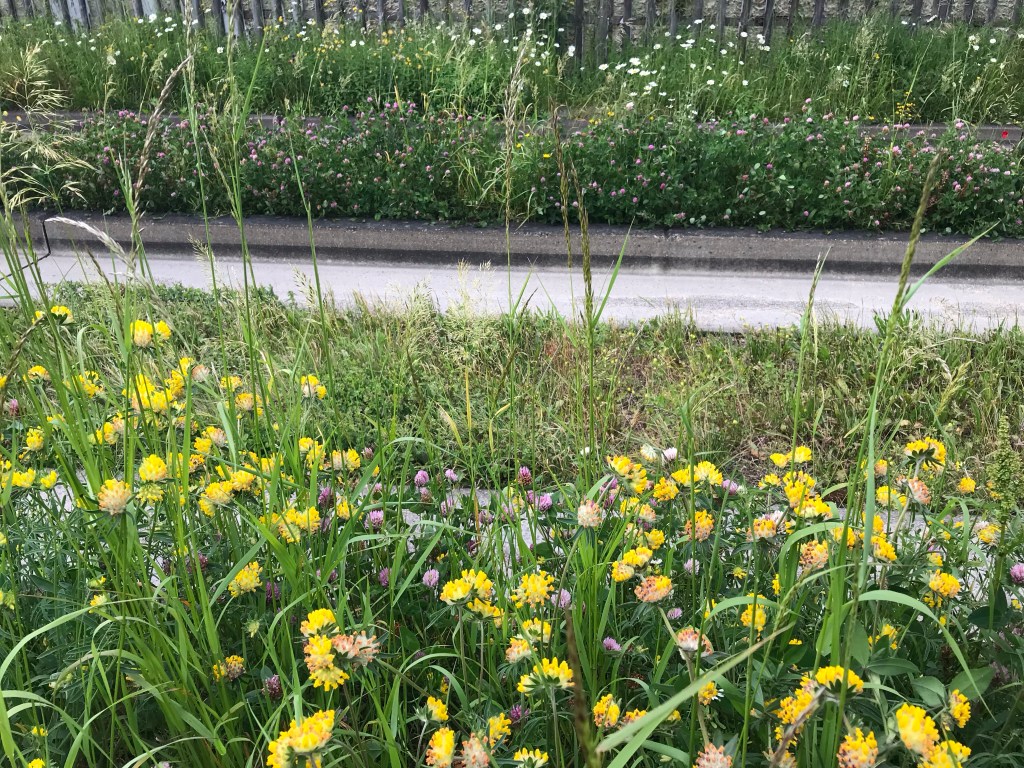
The busway has green swathes running down it where wildflowers blossom and useful plants abound. Architectural spikes of Teasel (Dipsacus fullonum), butterfly favourite Field Scabious (Knautia arvensis) grow among dye plants Weld (Reseda luteola), Goldenrod (Solidago sp.) and Lady’s Bedstraw (Galium verum).
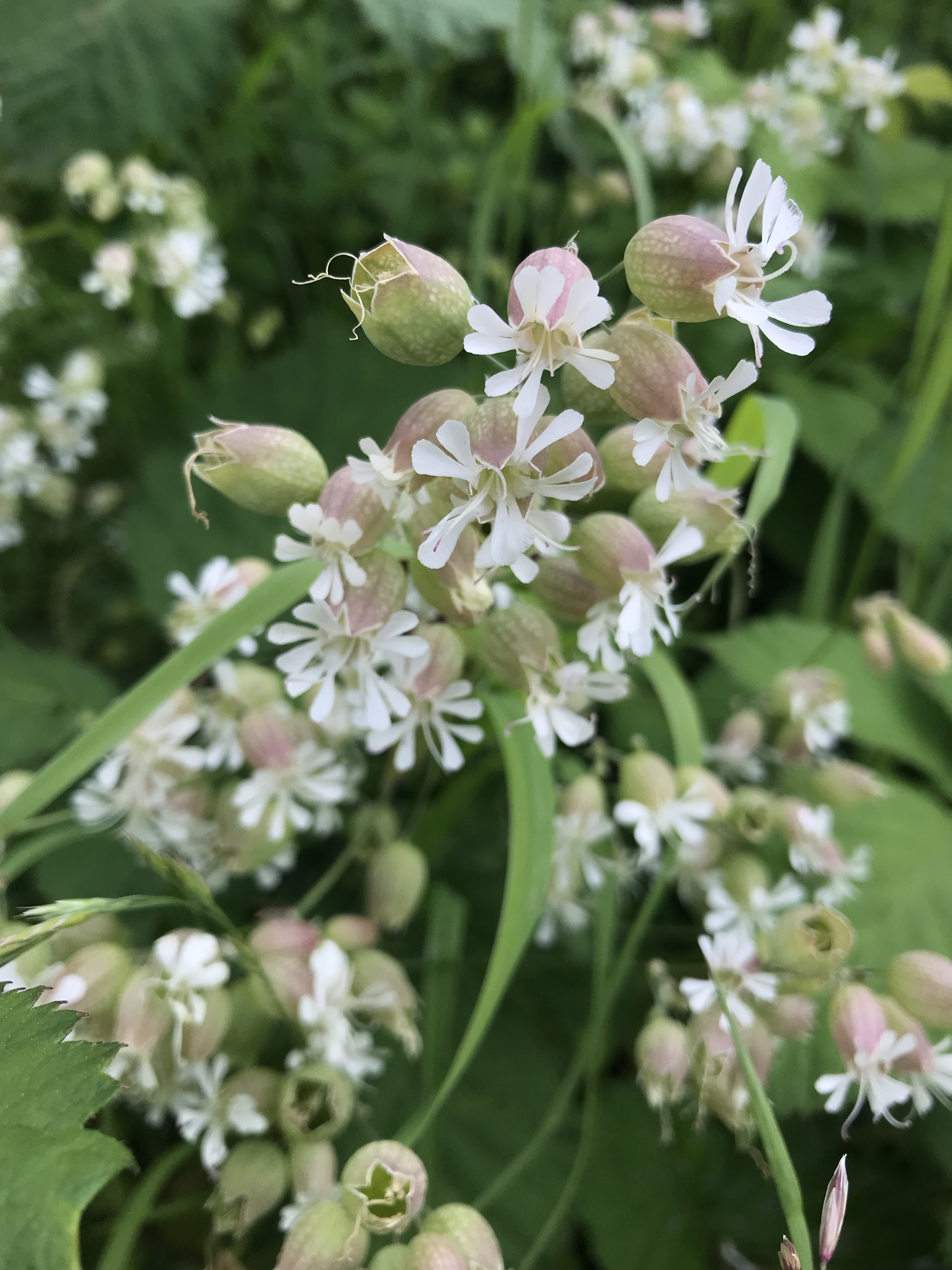
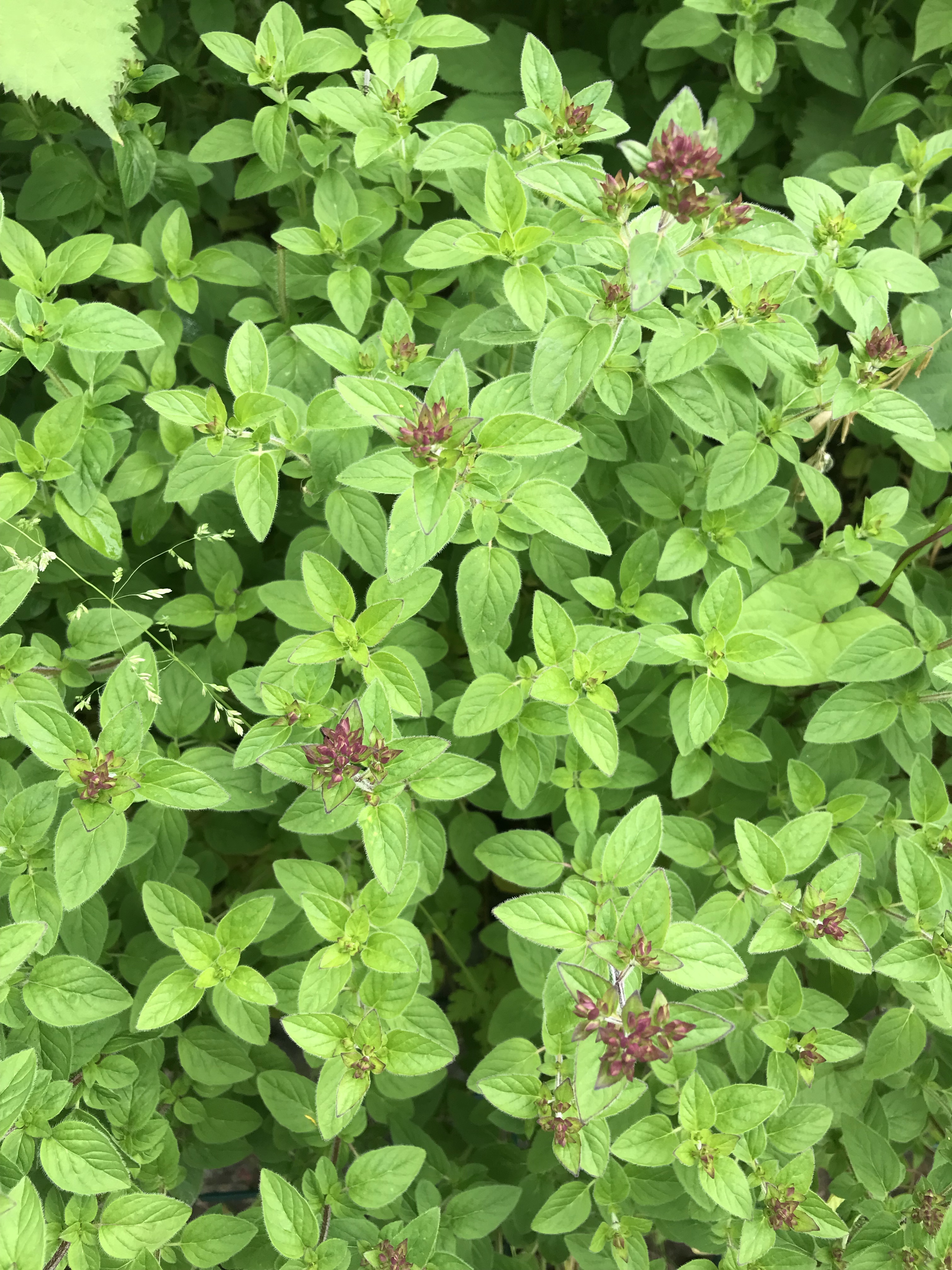
Edible Wild Marjoram (Origanum vulgare) and Bladder Campion (Silene vulgaris) nestle fragrantly in the verges. Bladder Campion, known in Italy as Sculpit or Stridolo is used to flavour risotto, pasta and ravioli, with it’s honeyed, peppery, herbal leaves, so beloved it even has it’s own festival in Galeata a mountainous village in the Emilia-Romagna region. Who knew such a star of the Mediterranean grew shyly among prosaic commuter lines?
Below: Bladder Campion and Wild Marjoram on the busway sidings
Board the bus at the Busway and you can sweep through the Blows Downs, past the meadows among the downland flowers, through Dunstable and to Leighton Buzzard where the bus drops you off at Bridge 114, the site of the former Whichello’s Wharf in the day’s of canal trading. This point is the starting point of the Greensand Ridge Walk, just a three minute walk down from the swan roost at the foot of the ramp (don’t forget to pay the swan toll!) and you return to the gates of the PHG where we first stepped foot onto the towpath, which now seems many meandering miles ago, and the end of this journey, come full circle; from the ghost of trains on the former rail line, the hiss and huff of the bus, boats gliding among greenery and our own little pocket of produce and preservation among it all.
And now, to rest…
 Welcome to The Pumphouse Garden